
What Could Be Hiding in Your Loft?
Many loft problems stay hidden for years. Rats, pigeon fouling, damp, black mould, ruined insulation, trapped moisture, heat loss, and uncertain previous work can all sit above the ceiling without being properly understood. Homeowners often only discover the scale of the problem when the smell worsens, the bills keep climbing, mould keeps returning, or a future survey raises uncomfortable questions.

Common Loft Concerns
Rats & Rodents
Pigeons & Droppings
Damp & Mould
Hidden Heat Loss












Rodents in the Loft
Rats and mice do not just stay hidden quietly in one corner. They can foul insulation, leave droppings, disturb loft materials, damage access areas, create unpleasant odours, and make a neglected roof space far more contaminated than the homeowner realises. Because the loft is out of sight, infestation is often suspected long before it is properly confirmed.
Rodent activity can also mean shredded insulation, nesting in dark corners, gnawing damage, and debris building up around stored items and loft edges. Local authority pest guidance warns that rats can create health hazards, unpleasant smells, and damage to buildings, while roof access routes such as overhanging branches can make loft spaces vulnerable.
Droppings and contamination may sit hidden for months
Insulation can be fouled, disturbed, or made ineffective
Scratching sounds and odours often mean more than homeowners think
Not every noise means a major infestation — but it is rarely wise to guess.
Pigeons, Bird Droppings and Loft Fouling
A loft used by pigeons or other birds can become filthy surprisingly quickly. Nesting material, droppings, dust, feathers, and fouled insulation can turn a roof space into something homeowners would never knowingly leave above their living space. The longer it is left, the harder it usually becomes to clean, restore, and use properly again.
Bird droppings and heavily contaminated loft areas should be treated seriously. Health and safety guidance recognises risks associated with work involving bird droppings and contaminated environments, which is one reason these situations should never be dismissed as “just a bit of mess.”
Droppings and nesting can foul insulation and stored belongings
Dirty loft spaces often come with strong odours and debris
What looks like an old nuisance can become a larger restoration issue
Some bird-related loft problems are straightforward. Others are far worse than expected once the space is properly seen.
It is not always vermin or visible mess that causes concern. Sometimes the biggest problems are moisture, mould, and heat quietly escaping year after year.
Damp, Black Mould and Stale Loft Air
Damp and mould in a loft are easy to underestimate because they often build quietly in the background. Homeowners may notice a musty smell, cold patches, condensation, or mould returning in rooms below without realising that trapped moisture in the roof space could be part of the problem. What looks like a small patch of mould or a bit of damp staining can sometimes point to a much wider ventilation or moisture issue above the ceiling.
Damp and mould are not just cosmetic concerns. The NHS says damp and mould primarily affect the airways and lungs, but can also affect the eyes and skin, and in severe cases may contribute to serious illness. Where loft moisture is persistent, black mould is visible, or stale air keeps building up, the real problem is often not knowing how far it has spread or what it may already be affecting.
Moisture can sit hidden in loft spaces for long periods
Black mould often signals a larger airflow or condensation issue
What smells stale or looks minor can be affecting more than one area of the home
Not every damp mark means a major problem — but mould and persistent loft moisture should never simply be ignored.
And sometimes the loft does not smell foul or look dramatic at all — it simply performs badly, wastes heat, and leaves the home more expensive to run than it should be.
Hidden Heat Loss and Wasted Money
Some loft problems are not dirty or obvious — they simply cost money month after month. A loft can look insulated and still perform badly if insulation is thin, patchy, compressed, damp, poorly fitted, or no longer suitable for the property. Many homeowners only suspect a problem when the house never feels warm enough, upstairs rooms stay colder than expected, or heating bills keep rising without a clear reason.
The danger with hidden heat loss is that it feels normal after a while. People adjust to colder rooms, draughts, and a home that seems harder to heat than it should be. A home’s heat can be lost through the roof where insulation is poor or missing, and loft insulation remains one of the common measures recommended to improve energy efficiency and support EPC performance.
Old insulation does not always mean effective insulation
Damp, disturbed or poorly laid insulation can quietly underperform
Heat loss through the loft can keep bills high and comfort low
A loft does not need to look disastrous to be costing you money every winter.
Signs Homeowners Notice Before They Know What They’re Dealing With
Most homeowners do not begin with certainty. They begin with signs they cannot quite explain — a smell, a stain, a colder room, a sound in the night, or the feeling that something above the ceiling is not right.
Musty smells
Cold upstairs rooms
Black mould returning
Condensation in colder weather
Strange scratching sounds
Droppings or debris in the loft
Dirty or old insulation
Concerns about spray foam
Heating bills that feel too high
On their own, these signs may seem minor. Together, they often point to a loft that needs properly understanding.
What Starts in the Loft Rarely Stays in the Loft
The loft is easy to ignore because it is out of sight. But what happens there can affect far more than the space itself. Contamination, moisture, damaged insulation, hidden deterioration, and wasted heat can all begin quietly — then show up later in the rooms below, in the bills you pay, or in the questions raised by a surveyor.
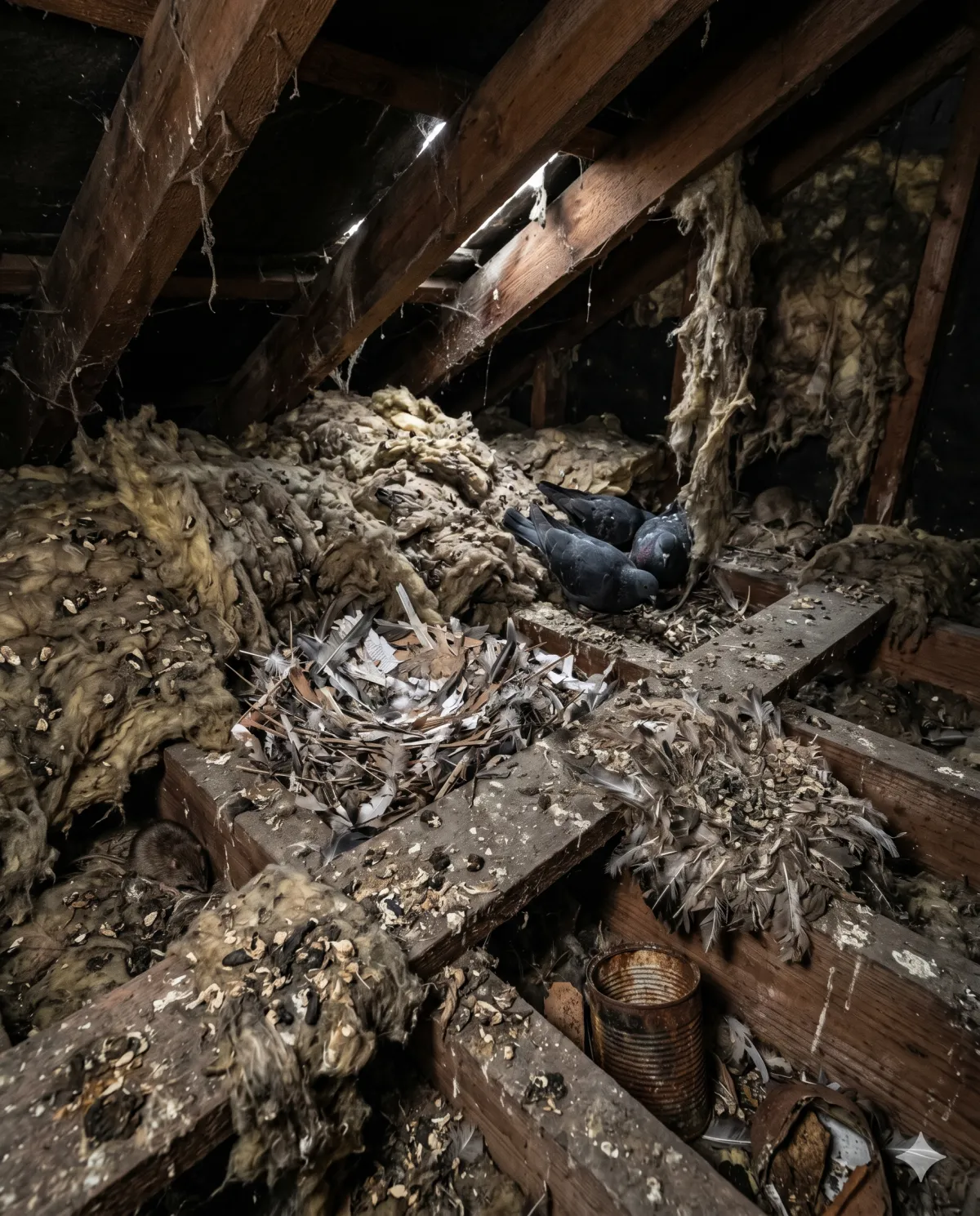
Contamination & Filth
Rodents, pigeons, nesting, droppings, and dirty insulation can leave the loft foul, unpleasant, and much harder to restore than most homeowners expect once it is finally opened up properly.
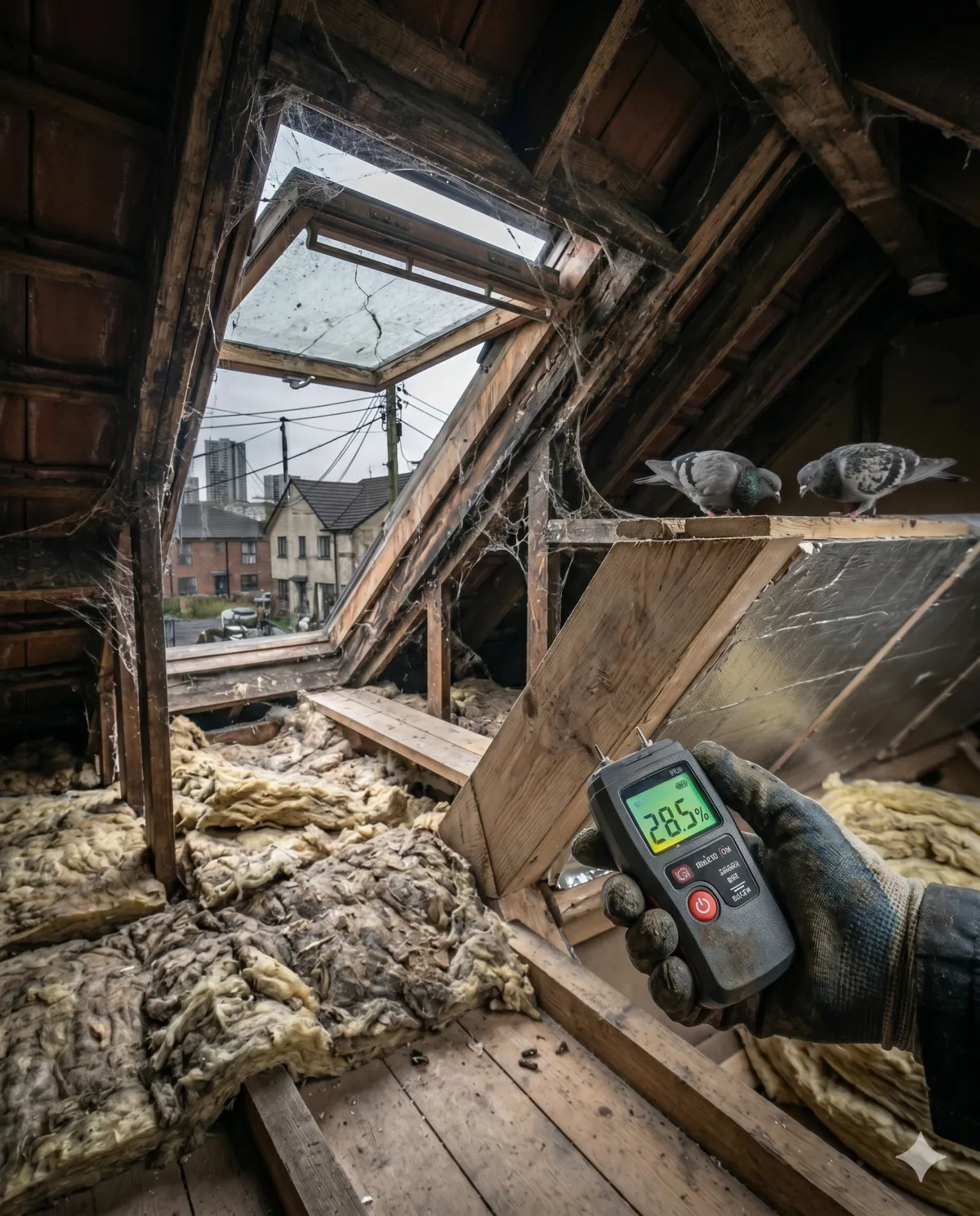
Moisture & Deterioration
Damp, mould, trapped condensation, and stale airflow can quietly damage insulation, affect loft materials, and contribute to a home that feels colder, dirtier, and less healthy than it should.
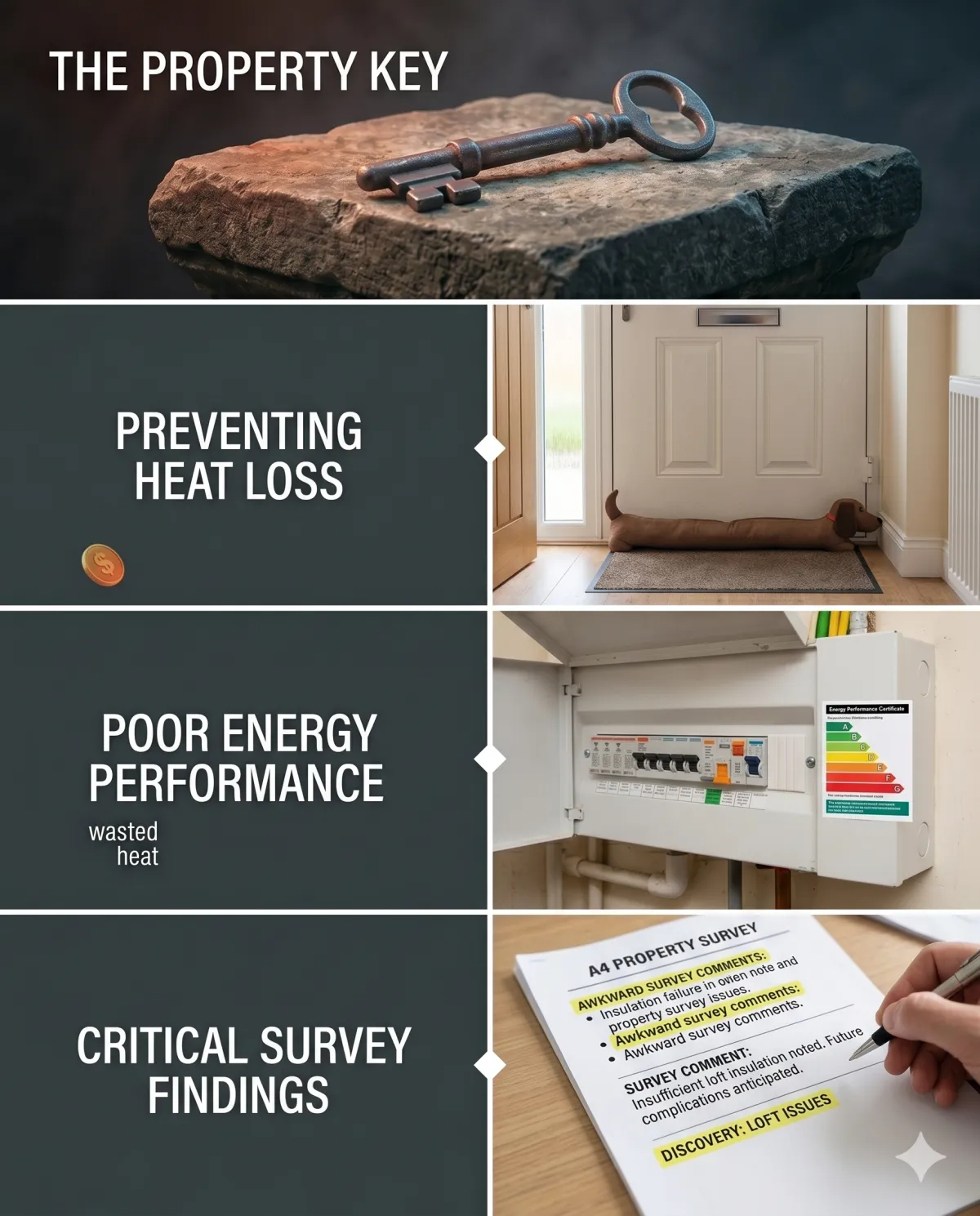
Wasted Heat & Future Trouble
Some loft issues are not discovered through smell or mess, but through wasted heat, persistent cold, rising bills, poor EPC performance, awkward survey comments, and remortgage or sale complications later on.
Some Loft Problems Are Unpleasant. Some Are Expensive. Some Are Only Discovered Too Late.
The Air in the Home
Damp and mould are not just unpleasant to see or smell. The NHS says damp and mould primarily affect the airways and lungs, but can also affect the eyes and skin, and in severe cases may contribute to serious illness. Where moisture and mould in the loft are persistent, the problem should not simply be dismissed as cosmetic.
The Money Lost Through the Roof
Not every loft problem looks dramatic. Some simply cost money every winter. A home’s heat can be lost through the roof where insulation is poor or missing, which is why loft insulation remains one of the most common improvement measures for better energy efficiency and EPC support.

The Condition of the Property
A neglected loft can quietly damage more than homeowners realise. Moisture, fouling, disturbed insulation, debris, and hidden roof-space issues can affect timbers, storage, insulation performance, and the overall condition of the home above and below the ceiling line.
The Trouble That Comes Later
Some loft concerns only become painful when a survey is underway, a buyer is waiting, or a remortgage is on the line. Spray foam is one example: BBC reporting found that some major UK lenders do not lend on homes where spray foam is found in the roof, while others assess case by case due to concerns around trapped moisture and hidden roof timbers.
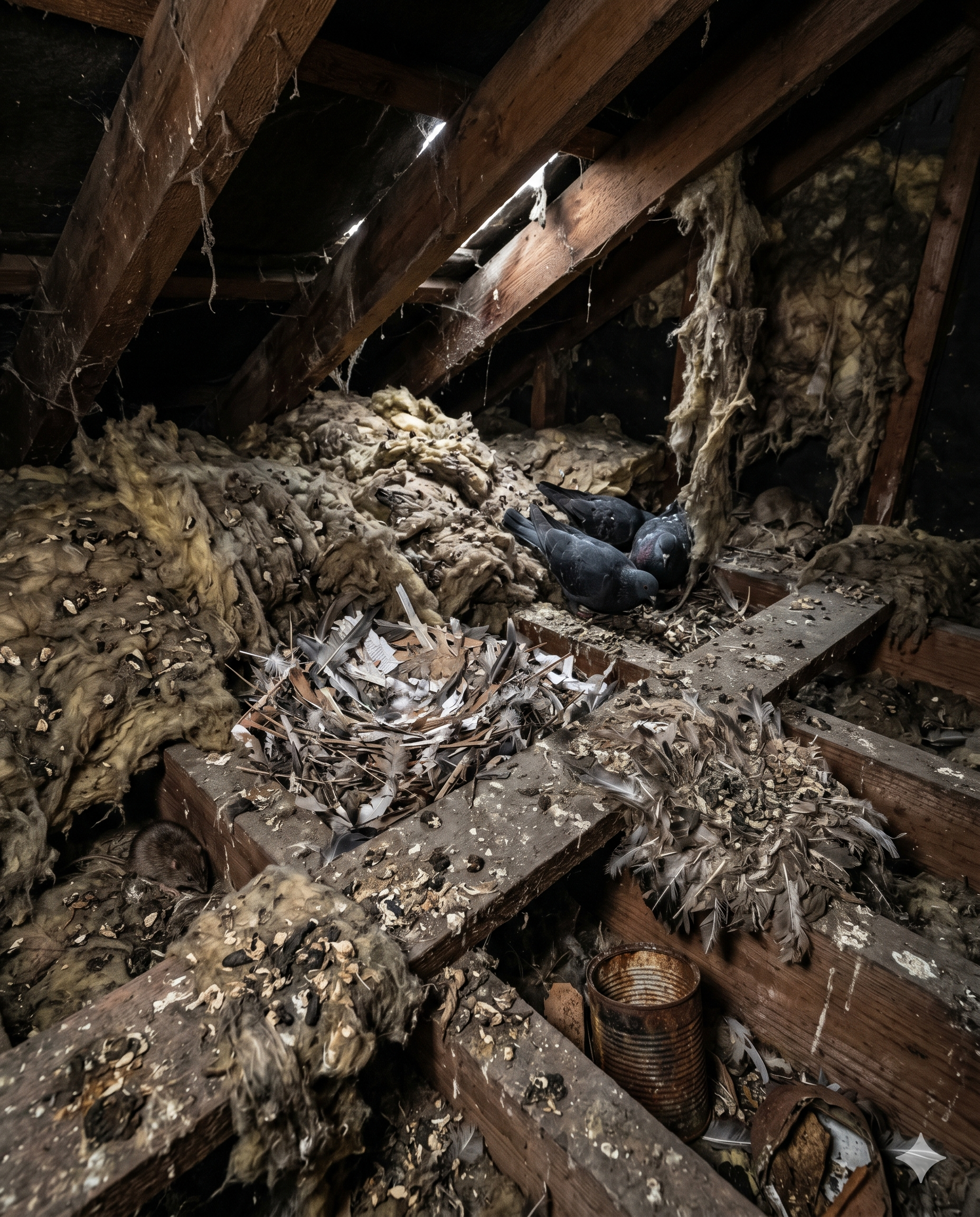
Why Homeowners Often Leave Loft Problems Too Long
Most loft problems do not begin as emergencies. They begin as uncertainty.
A strange smell.
A patch of mould.
A colder bedroom.
A loft nobody wants to climb into.
A suspicion that the insulation looks wrong.
A feeling that something is not right, but not knowing whether it matters.
That uncertainty is exactly why problems get left. And the longer they sit there unseen, the more unpleasant, expensive, or awkward they can become to deal with later.
If You’re Unsure What’s Happening Above the Ceiling, That Uncertainty Is the Problem
Many loft problems are easy to ignore because they are hidden. But what starts as smell, dirt, mould, old insulation, heat loss, or “probably nothing serious” can become much more awkward if it is never properly understood. A proper assessment helps you find out whether there is a genuine issue — and what, if anything, should happen next.
Clear Findings. Clear Reporting. Clear Next Steps.
The purpose of the assessment is not to assume the worst. It is to help you understand whether there is a genuine loft concern, how serious it appears to be, and what should happen next — if anything at all. Some issues turn out to be manageable. Some are more significant. The important thing is knowing which is which.
If nothing major is required, we will say so. If something needs attention, we will explain it clearly.


LoftAssessments is a home assessment service by Apex — clear findings, clear reporting, clear next steps.
Quick links
Other
© . 2026. All Rights Reserved.